An unpaid invoice is not automatically a small-claims case. Before filing, a business owner has to answer six practical questions: Is this the right defendant? Is money the remedy the court can award? Is the amount within the court’s jurisdiction? Is this the right county or court? Have any required pre-suit steps been completed? Can the defendant be served correctly?
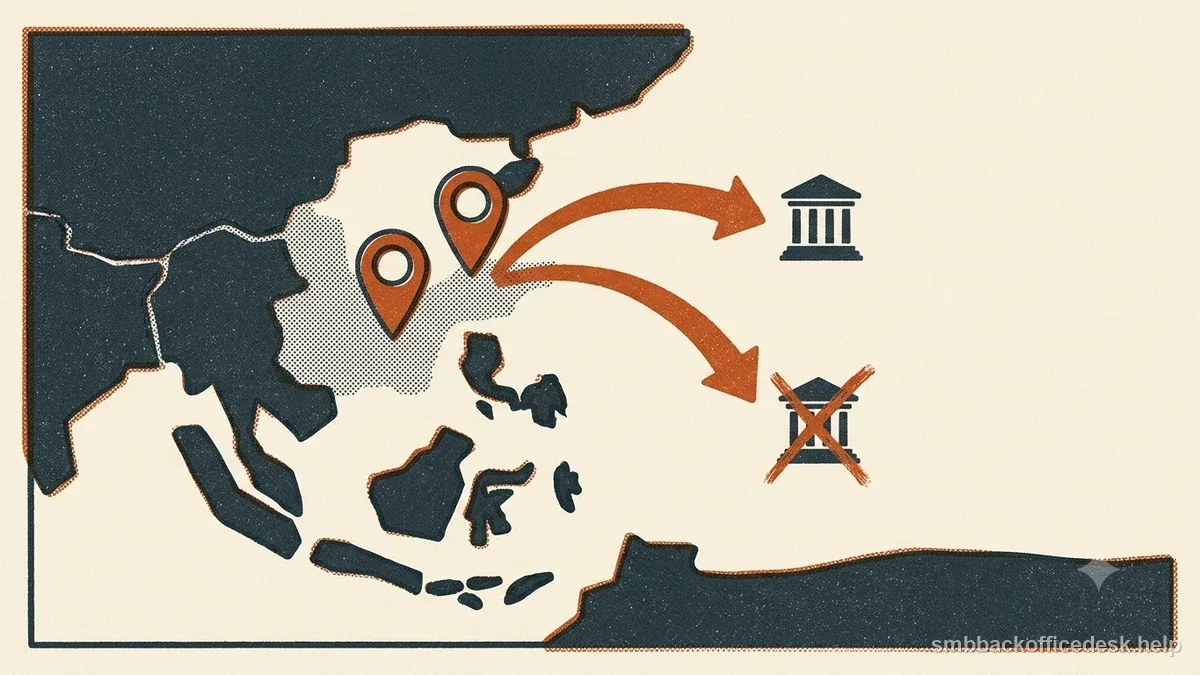
Small-claims rules are state and sometimes county specific. The examples below show why a nationwide article cannot give one filing number and pretend it applies everywhere.
Compare the court limit with the plaintiff you actually are
| Example jurisdiction | Published limit for this example | Filing-fee example |
|---|---|---|
| California | generally $12,500 for an individual; $6,250 when suing on behalf of a business | $30 up to $1,500; $50 over $1,500 through $5,000; $75 over $5,000 through $12,500, with a different rule for frequent filers |
| New York City | a corporation, partnership, or association may use Commercial Claims for up to $10,000 | $25 per Commercial Claim plus postage |
| Texas | Justice Courts handle civil actions of not more than $20,000, including small claims | Texas OCA publishes statewide and local-option fee components; the actual total varies by county, so check the current court/OCA schedule |
Those are sourced examples, not a nationwide fee chart. Before filing, confirm the limit, plaintiff type, filing fee, service fee, and any local add-ons on the official page for the court that will hear the case. A state can also have different procedures for individuals, businesses, consumer transactions, or frequent filers.
Step 1: prove who owes the money
Pull the signed contract, proposal, purchase order, change orders, invoice, delivery or completion evidence, and customer communications. Identify the name that agreed to pay.
If the contract says “ABC Services LLC” but the invoice was sent to “ABC Plumbing,” determine whether the latter is a trade name. Search the state business registry and any fictitious-name records needed to identify the legal entity. Suing a brand name that is not a legal person can create collection problems even if the facts of nonpayment are obvious.
For a sole proprietor, the proper defendant may include the individual doing business under a trade name. For a corporation or LLC, the business entity itself may be the defendant. Verify local naming rules.
Check the filing deadline before spending time on a demand or hearing packet. Limitation periods depend on the claim and jurisdiction; even written and oral contract claims can have different clocks. California, for example, lists different general periods for written and oral contracts, but those examples do not apply nationwide. Read the contract for a venue clause, required notice, mediation, or arbitration term, and verify the current deadline with the official court or a lawyer if facts are unclear. Do not assume reminders or settlement talks pause the clock.
Step 2: calculate a claim the judge can follow
Create a one-page ledger: - contract price; - approved changes; - amounts paid; - credits/refunds; - unpaid principal; - interest or fees only if supported by contract or law; - total requested.
Do not inflate the claim to punish a difficult customer. Small claims usually provides a money remedy; it is not a general forum for forcing performance or obtaining every type of business relief.
If the customer disputes scope, quality, timing, or authorization, preserve that response too. An invoice shows what you billed; by itself, it does not establish that the customer approved the work or that you completed it as agreed. Pair the invoice with signed change approvals, delivery or acceptance records, revision history, and messages about any defect or credit. State the strongest likely defense fairly and show how the documents answer it. Keep genuinely disputed and undisputed amounts separate when you calculate the balance.
If the invoice exceeds the court’s limit, decide whether local law permits waiving the excess to stay in small claims or whether another civil court is appropriate. Do not split one claim into artificial pieces merely to evade jurisdictional rules.
Step 3: determine the correct court and venue
Venue rules vary. Common connections include where the defendant lives or does business, where the contract was made or performed, or where the obligation arose. California’s SC-100, for example, asks the plaintiff to state why the chosen county is proper.
Go to the official state court site and then the local court or clerk. Confirm the court address, filing method, forms, fee, deadline, and any local add-ons.
Step 4: make the final demand useful evidence
Send a concise demand that identifies the contract, invoice number, amount due, original due date, prior payments, and a reasonable deadline to respond. Attach the invoice or ledger.
Avoid threats you cannot or should not make. The goal is to show that the defendant knew exactly what was claimed and had a chance to resolve it. Preserve delivery evidence.
Some courts or claim types require a pre-suit demand; others do not. Verify before filing.
Step 5: file and serve as two separate jobs
Filing starts the case. Service gives legally sufficient notice to the defendant. The plaintiff often cannot personally serve the papers.
Use the court’s authorized methods and deadlines. California, for example, permits methods including personal and substituted service and requires proof of service. Its current self-help material says the plaintiff cannot serve the forms personally.
Do not assume an emailed PDF or certified letter counts as service just because the customer received it.
Step 6: prepare a hearing packet around the elements of the claim
Build a short chronology and exhibits: agreement, work evidence, invoice/ledger, demand, and communications. Bring copies in the form the court requires.
Practice the case in five minutes: what was agreed, what you did, what became due, what was paid, and what remains. A small-claims judge needs facts and documents, not a history of every frustrating interaction.
If you win, the judgment is not the same as cash. Before filing, estimate the practical recovery: filing and service fees, travel or time away from work, whether the defendant can be located and served, and which post-judgment collection procedures the local court allows. A dissolved or closed business, disputed legal identity, or unreachable defendant can make collection harder; none alone proves whether assets or legal responsibility exist. Learn the local collection process and its costs before treating the invoice balance as a likely recovery.
For a full walkthrough of filing in small claims court, see: {{BACKLINK_5}}
| Case proof | Collection readiness | |
|---|---|---|
| Question | Why money is owed | Can judgment become payment? |
| Evidence | Agreement, performance, balance | Assets, location, and enforcement cost |
| Decision | Can court award remedy? | Would recovery justify filing and collection effort? |