A contract is not persuasive merely because it is long and signed. In an unpaid-invoice case, the judge needs to connect a specific promise to your performance, the defendant’s nonpayment, and the amount you are asking for. Organize the agreement around those questions.
Identify which document actually formed the deal
Business relationships often involve a proposal, purchase order, master services agreement, statement of work, email acceptance, and later change orders.
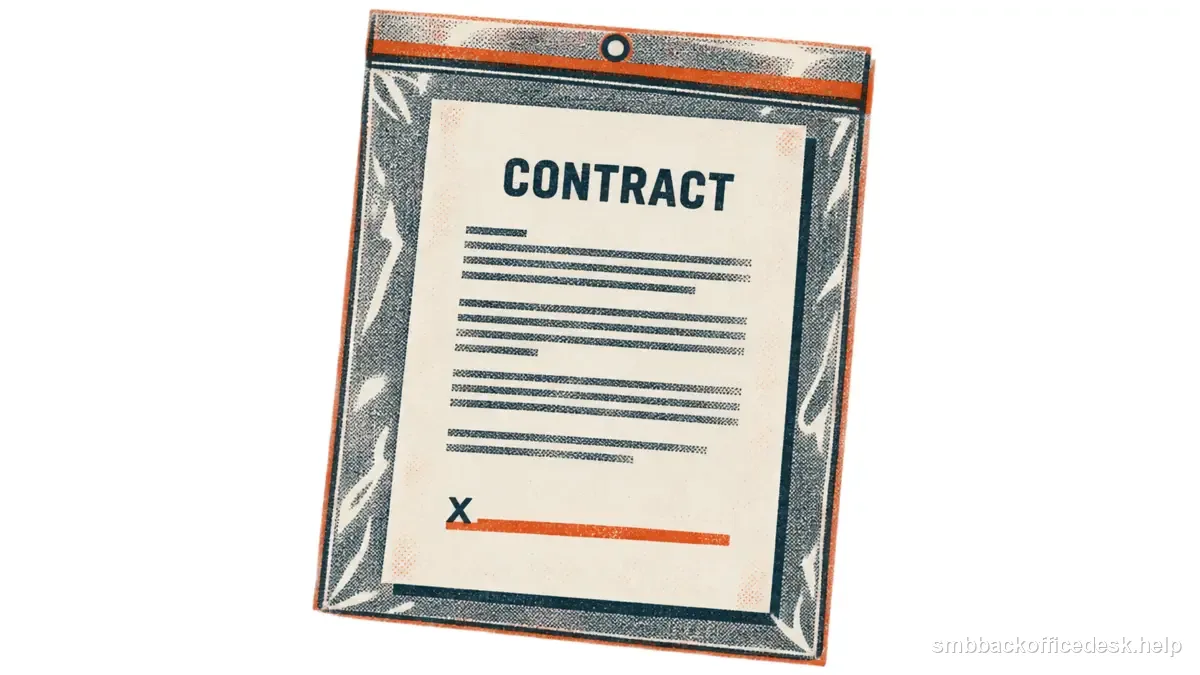
Create a contract map: - master agreement and effective date; - project/SOW; - price and payment schedule; - acceptance criteria; - change-order method; - cancellation/refund terms; - notice clause; - dispute/venue clause; - signatures or acceptance evidence.
Do not assume the newest PDF controls every issue. A signed master agreement may incorporate a later SOW; a change order may amend price only.
Mark the clauses that prove the claim
Highlight or tab the payment clause, deliverable, due date, acceptance term, and any relevant late-fee provision. Keep highlighting restrained. If half the contract is yellow, nothing stands out.
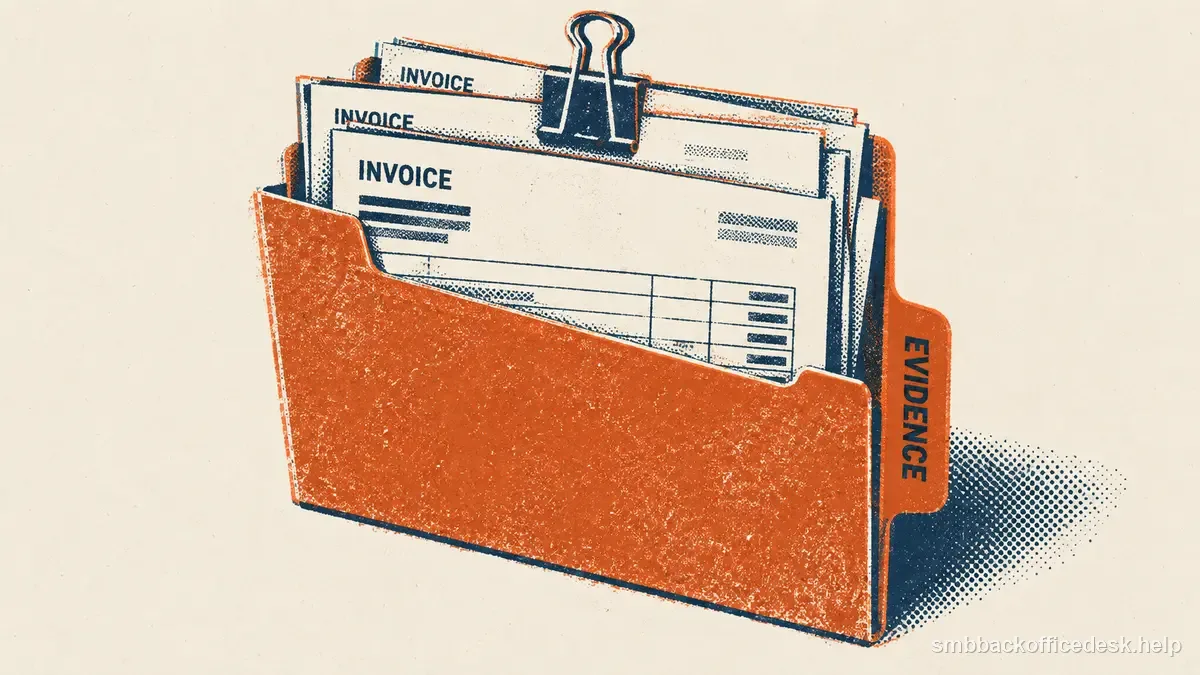
Create a one-page exhibit index: “Exhibit 1 — May 4 MSA, §3 payment terms; Exhibit 2 — June 2 SOW, page 2 scope; Exhibit 3 — July 17 signed change order.”
The goal is to let the judge find the supporting language quickly.
Prove agreement to amendments
A common invoice dispute involves extra work. If the contract requires written change orders, locate the signed amendment or email that satisfies the clause.
If the customer asked for extra work informally, preserve the messages, meeting notes, revised estimate, and evidence they accepted the result. Whether that creates an enforceable modification depends on the governing law and contract; do not present an informal text as a signed change order if it was not one.
If your claim depends heavily on a disputed oral modification, understand that the case may be less straightforward than the original invoice suggests. If the agreement was made in a call or meeting, write down who participated, the date, and what each person recalls, then preserve any prompt follow-up email. A witness should speak to what they personally saw or heard, not repeat a business owner’s conclusion. Check the local court’s witness and subpoena process early if key proof is held by someone else.
Pair each promise with performance evidence
Next to the contract clause, identify what proves you did the work: - delivery receipt; - milestone approval; - signed completion form; - files transmitted; - service logs; - customer use; - before/after photographs; - project-management acceptance; - messages acknowledging completion.
A contract proves what should happen; performance evidence proves what did happen.
If performance was partial, be precise. Explain what portion was completed and how the amount claimed follows from the agreement.
| Agreement | Performance | |
|---|---|---|
| Scope | Required work | Delivered work |
| Acceptance | How changes were approved | Milestone signoff or message |
| Payment | Amount and due terms | Invoice and ledger |
| Dispute | Notice/cure duties | Complaint and cure record |
Address the customer’s defense before the hearing
Collect the actual complaint. Did the customer say the work was late, defective, outside scope, or never approved? Find the contract language and evidence that answers that point.
If the contract contains a notice-and-cure procedure, check whether both sides followed it. A customer may argue that a defect justified withholding payment; your records may show the defect was corrected or that the customer accepted the deliverable.
Do not delete unfavorable messages. A complete chronology is safer than being surprised when the defendant produces the same email.
Authenticate electronic contracts practically
Bring the complete document and evidence showing how it was accepted: e-signature audit trail, email transmitting the final version, account log, or signed PDF. For click-through agreements, preserve the version of the terms and records showing the user’s acceptance.
Court evidence rules vary, but small-claims judges still need a reason to believe the exhibit is what you say it is.
Print readable copies. If a digital exhibit includes tiny screenshots, convert it into pages the judge can review without zooming. Export complete email or text threads with sender names, dates, and surrounding replies visible; a cropped message can hide the approval or correction that changes its meaning. Keep native files and create a separate print copy. If the terms live behind an account portal, retain the version and acceptance log rather than recreating them later. Ask the clerk whether digital exhibits need advance upload or paper copies, especially for a remote hearing.
Build the argument in five lines
1. The parties agreed to X. 2. The contract required payment of Y on date Z. 3. We performed X, shown by exhibits. 4. Defendant paid A and did not pay B. 5. We request B plus only those costs/amounts the court permits.
That framework keeps the hearing focused. The contract is the backbone, but the case becomes convincing when each disputed clause is paired with a dated real-world event. Make a one-page exhibit map with each item’s number, date, and the point it proves, then practice opening the document that matches each line. Keep an unmarked original and prepare the number of copies the court requires. California Courts, for example, asks parties to bring an original and copies for the judge and other side; verify your local court’s format and submission deadline.