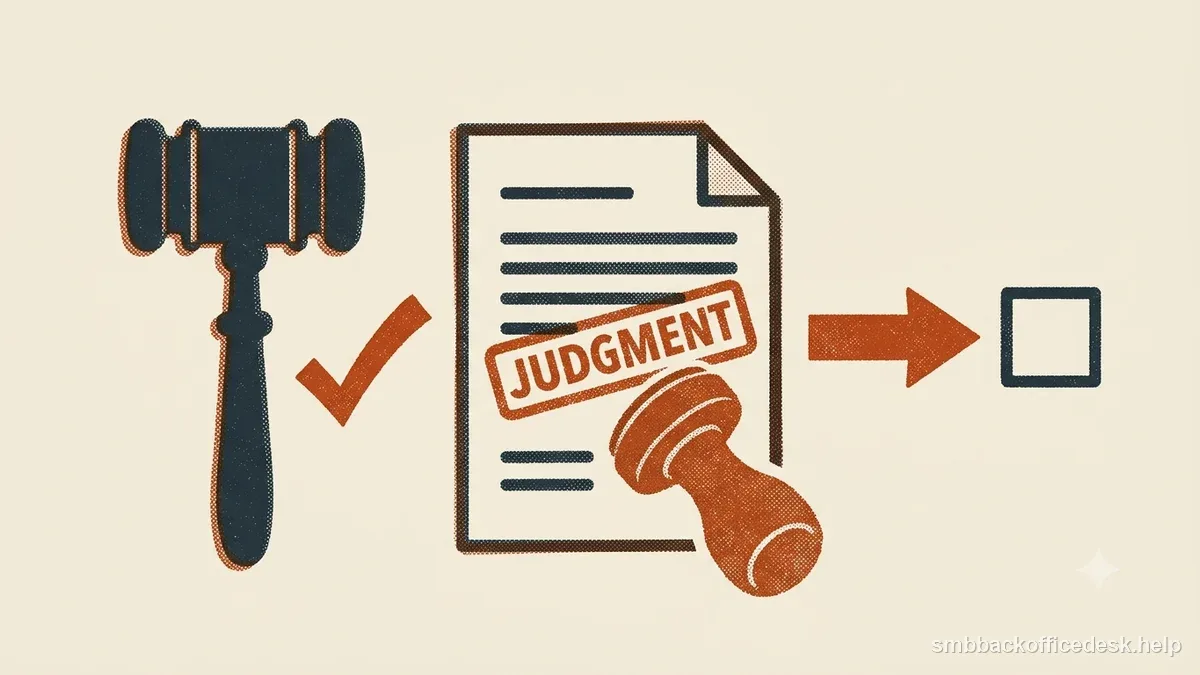
Winning a small-claims case creates a judgment, not an automatic bank transfer. The court generally does not collect the money for you. The next steps depend on the jurisdiction’s waiting periods, appeal or set-aside rights, and enforcement procedures.
Read the judgment notice before contacting anyone
Confirm: - judgment amount; - judgment debtor’s exact name; - date entered; - costs or interest included; - deadline for appeal or motion, if any; - date enforcement may begin; - whether the court requires any immediate post-judgment form.
Do not start garnishment merely because the judge announced a decision in court. California, for example, tells creditors to wait until the 30-day period to appeal or vacate has passed before beginning collection. Other states have different timing. Compare the written judgment with what the judge awarded; if the debtor name or amount is wrong or incomplete, ask the clerk about the local correction process before you give the judgment to an enforcement officer.
- Judgment enteredCheck amount, debtor, challenge, enforcement dates.
- Eligible to collectRequest payment or use lawful process.
- Payment receivedReconcile direct, court, or officer record.
- Paid in fullFile satisfaction and release liens if required.
Send a clean payment request
Once appropriate, send the debtor a copy of the judgment or identify the case, amount due, and payment method. Provide a short deadline to propose payment.
If installments make business sense, document the schedule and how payments will be applied. Understand whether the agreement changes your enforcement rights before accepting a new settlement contract.
Do not add collection fees simply because collection is inconvenient. Recoverable post-judgment interest and enforcement costs are governed by state law.
Track every post-judgment payment
Create a judgment ledger separate from the original invoice: - judgment principal; - awarded costs; - post-judgment interest if applicable; - enforcement costs the law allows; - payments; - balance.
Keep the supporting bank or court records. Record each credit against the judgment and recalculate the unpaid balance before requesting further collection.
File satisfaction when the judgment is paid
Courts require creditors to acknowledge payment. California uses Acknowledgment of Satisfaction of Judgment (SC-290) in small claims. Failure to file required satisfaction paperwork can create problems for the debtor and potential consequences for the creditor.
Do not wait months because the relationship was unpleasant. Once paid, close the judgment correctly.
If the debtor does not pay, investigate assets lawfully
You need to know where the debtor has reachable assets. Depending on state law, tools can include judgment-debtor disclosures, debtor examinations, subpoenas for financial information, bank levies, wage garnishment, or liens.
California small-claims procedures can require a judgment debtor to provide a Statement of Assets (SC-133) after the relevant period, and the creditor can use court procedures to obtain more information when the debtor does not cooperate.
New York City’s court guidance describes sheriffs and city marshals as enforcement officers and lists methods including wage or bank garnishment and liens or seizure under applicable rules.
Those are jurisdiction-specific examples. Use your state’s enforcement forms.
Decide whether collection economics make sense
Before paying for an enforcement officer, transcript, lien, or asset search, estimate the likely return. A business with no assets, no bank account you can identify, and no continuing operations may be difficult to collect from.
Check whether the judgment can be renewed and how long it remains enforceable in your jurisdiction. Calendar deadlines so a collectible judgment does not expire through inattention.
Settlement can remain rational after judgment. A debtor may pay a discounted lump sum faster than a full balance collected over months. Document any compromise and file satisfaction only when the agreed condition is met.
Avoid prohibited self-help
A judgment does not give you permission to seize property yourself, access private bank data, harass the debtor, or contact unrelated people in a way the law prohibits. Use the court and authorized enforcement process.
If the debtor files bankruptcy, collection activity can be affected by the automatic stay and bankruptcy rules. Stop ordinary collection and obtain appropriate legal guidance.
The post-judgment file should contain the signed judgment, enforcement eligibility date, payment requests, ledger, asset information obtained lawfully, enforcement forms, receipts, and final satisfaction. Winning becomes valuable only when those steps convert the judgment into payment without creating a new legal problem.
Reconcile the payment route before closing the judgment
A debtor’s payment proposal, a court-held payment, and an enforcement officer’s remittance are different records. For a direct transfer, wait for cleared funds and retain the remittance details. If the debtor pays through the court, follow the clerk’s instructions to claim money already received; California’s SC-145 process is one example. Do not demand again an amount the court is holding.
If a sheriff or marshal collects, obtain the officer’s statement and reconcile the gross amount collected, authorized fees, net remittance, and any balance still due. Ask the issuing office about an unclear deduction before changing the account or sending another demand. When the full judgment is paid, follow the court’s satisfaction process; California uses SC-290. Keep the filed acknowledgment with the judgment and final payment record.
| Path | Reconcile | |
|---|---|---|
| Direct | Bank receipt | Debtor remittance |
| Court | Court receipt | Claim/payment process |
| Officer | Collection statement | Fees and remitted amount |