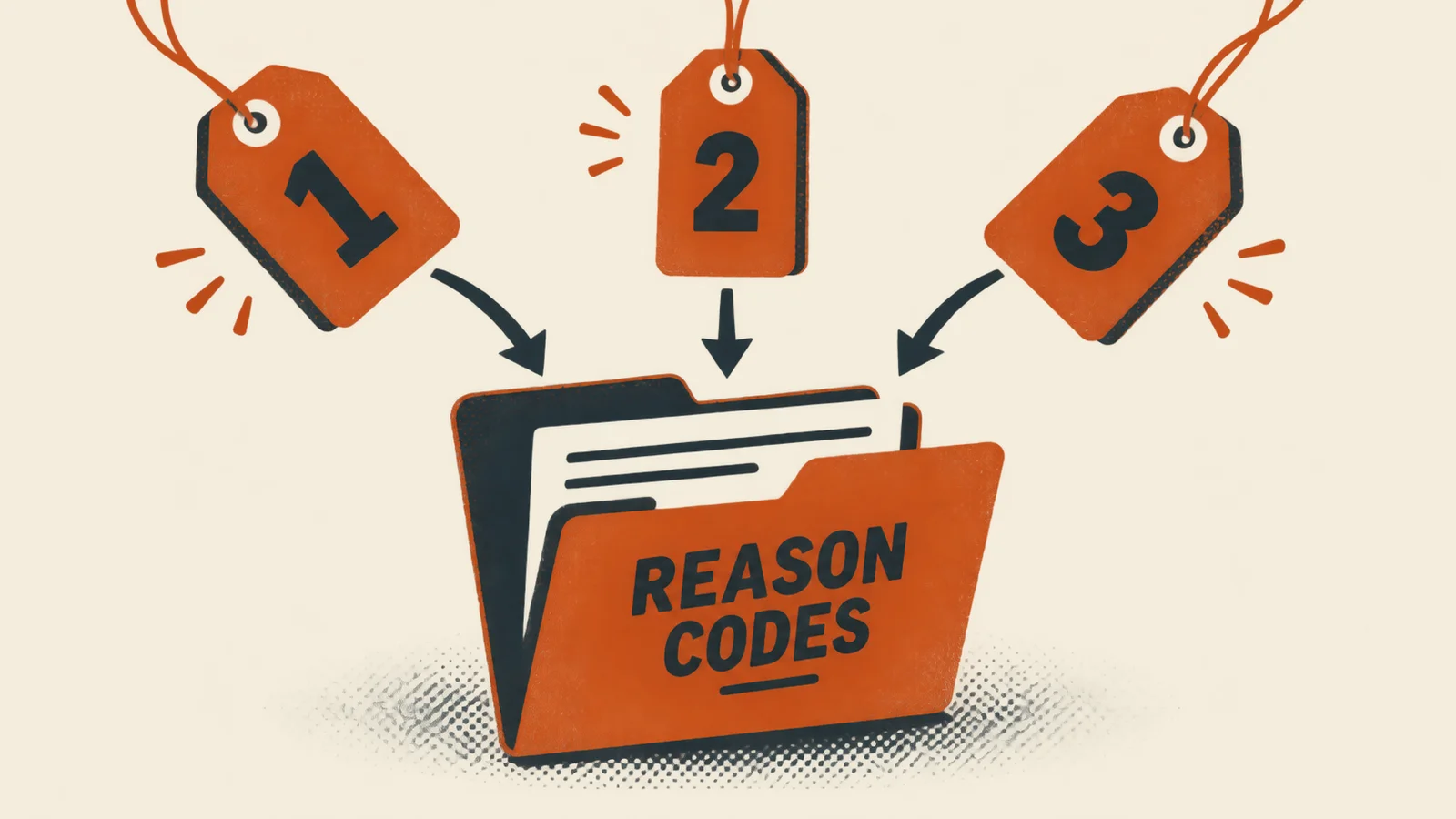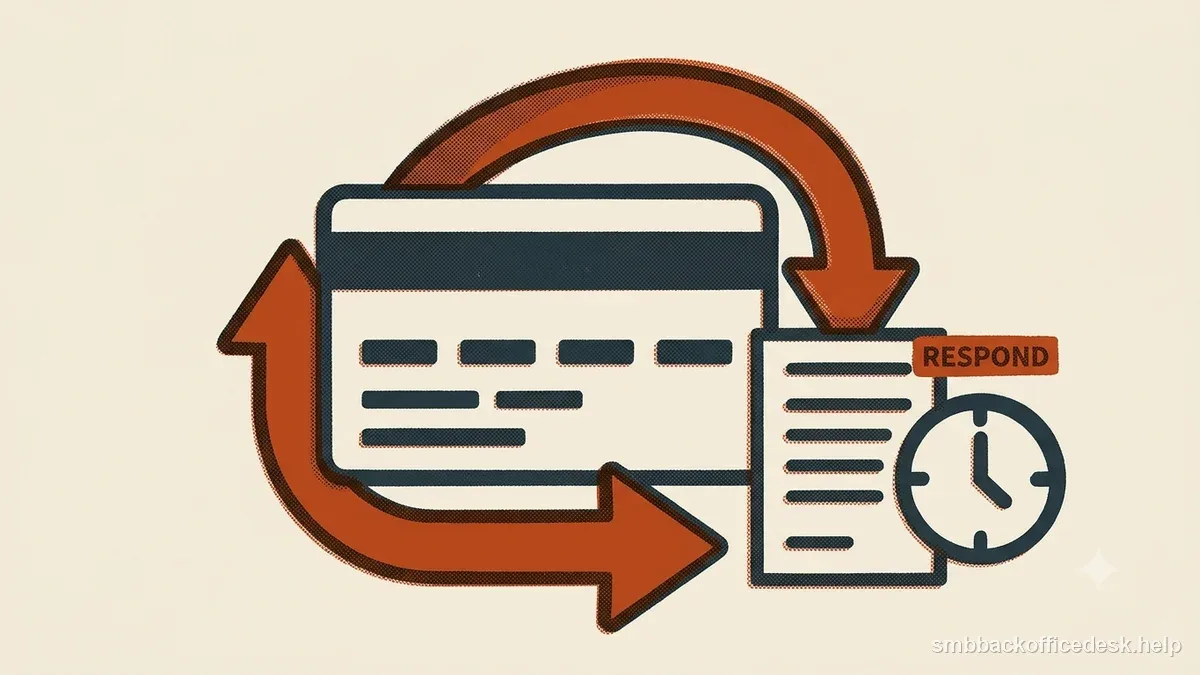
A chargeback response starts with the dispute notice, not with a generic folder of receipts. The cardholder’s bank has assigned a dispute category or reason, your processor has given you a response deadline, and the evidence has to answer that reason. A “kitchen sink” PDF can make a strong case harder to review.
Open the dispute notice and capture six fields
Before contacting the customer, record: - processor dispute ID; - network/reason category; - transaction date and amount; - cardholder or order identifier; - evidence deadline shown by the processor; - current status and amount debited/held.
Shopify notes that evidence deadlines are commonly in a limited 7–21 day range, but the date shown in your processor’s case is the date to use. Networks and processors can apply different clocks, and missing the portal deadline can end the case regardless of evidence quality.
Download the notice before the dashboard changes status.
- NoticeCapture ID, reason, amount, deadline, status.
- ReviewMatch evidence and test portal files.
- SubmitSave exact packet and confirmation.
- AfterFollow processor workflow; promise alone may not close case.
Decide whether the dispute is actually contestable
Accept the chargeback when your records confirm the customer is right—for example, you accidentally processed the same sale twice, charged after a valid cancellation, or promised a refund and never issued it.
Contest when you have evidence that directly contradicts the reason. “The customer is lying” is not evidence. Tracking showing delivery, a cancellation timestamp after the disputed renewal, two distinct order numbers for two charges, or access logs for a digital product are evidence.
Also compare the disputed amount with the cost of staff time and any additional fees. Representment should be an economic decision, not an automatic reaction.
Build the packet around the reason
For product not received, lead with delivery: carrier, tracking number, destination, delivered date/time, signature/photo if available, and relevant customer communications.
For product not as described, lead with what was advertised and what was delivered: product page, order details, photos/specifications, return policy, customer complaint, and any replacement/refund offer.
For canceled recurring, show the accepted subscription terms, cancellation policy, actual cancellation timestamp, renewal date, reminder/receipt, and post-charge usage when relevant.
For duplicate processing, show the processor transaction IDs and either evidence that only one settled transaction exists or that two similar charges correspond to two separate orders.
For credit not processed, show the refund policy, return/cancellation facts, refund transaction ID and date if issued, or the reason no refund was due.
Write a one-page evidence narrative
The first paragraph should identify the dispute and your conclusion. Then point to exhibits in chronological order.
Example:
“Order 8841 was placed on May 2 and shipped May 3 to the checkout address. Carrier tracking 1Z… shows delivery May 6 at 2:14 p.m. The customer contacted us May 7 asking where the package was; we replied with the same tracking record. Exhibits 1–3 show the order address, tracking, and communication.”
Do not spend the first page describing your company history or how chargebacks hurt small businesses.
Check auto-filled fields and rank the evidence
Some processor dashboards attach order data automatically. Shopify Payments may add product and customer details, billing and shipping addresses, fulfillment and tracking, customer communications, accepted policies, and digital access records when available. Compare those fields with the disputed transaction before submission; if an item is wrong or missing, correct it through the available fields or explain the gap in your narrative. Automatic data is not a defense by itself.
Put direct proof first, then customer acknowledgement and accepted terms, with a short caption explaining what each item establishes. Keep order numbers, dates, and enough thread context visible. IP or device data can support other evidence, but does not alone establish that the cardholder authorized the disputed transaction.
Submit once, then lock the file
Many processors do not let merchants continuously amend evidence after submission. Review the packet against the reason code, verify every attachment opens, and submit before the deadline.
Save the submitted PDF or screenshots of the final evidence, submission timestamp, and processor confirmation.
If the customer says they will withdraw the dispute, still follow the processor’s instructions. A customer message does not necessarily close the bank case immediately.
Monitor your dispute rate, not only individual wins
Visa’s current VAMP program combines counts of certain fraud reports and disputes relative to settled card-not-present transactions. Its 2025 fact sheet states that, effective April 1, 2026, the Excessive Merchant VAMP ratio threshold for the U.S., Canada, EU, and AP regions is 150 basis points (1.5%) with a 1,500 monthly fraud-and-dispute count minimum for that merchant threshold. The program has additional definitions and exclusions, so do not compare a dashboard’s simple “chargeback rate” to VAMP without understanding the metric.
Your acquirer or processor may impose tighter internal thresholds or reserve actions long before a network program applies. Track disputes by reason, product, channel, and cohort so prevention begins before a monitoring program does.
For a deeper chargeback response guide, see: {{BACKLINK_7}}
Preflight the processor portal before the evidence deadline
File rules can turn a good case into a failed upload. For Shopify Payments, current guidance accepts PDF, JPEG, and PNG evidence, requires PDF/A for PDFs, limits each PDF to fewer than 50 pages, limits each evidence file to 2 MB, and limits combined evidence files to 4 MB. Shopify also says not to submit audio/video or links that force the reviewer to leave the packet. Other processors have their own limits, so use the rules displayed for the actual dispute.
Build the final packet early enough to test every file. Open the PDF after export, check that screenshots are legible at normal zoom, confirm dates and order numbers are visible, and make sure the strongest evidence is not hidden behind a broken attachment. If the portal allows editing only until submission or due date, keep one internal deadline for content review and an earlier technical-upload test.